


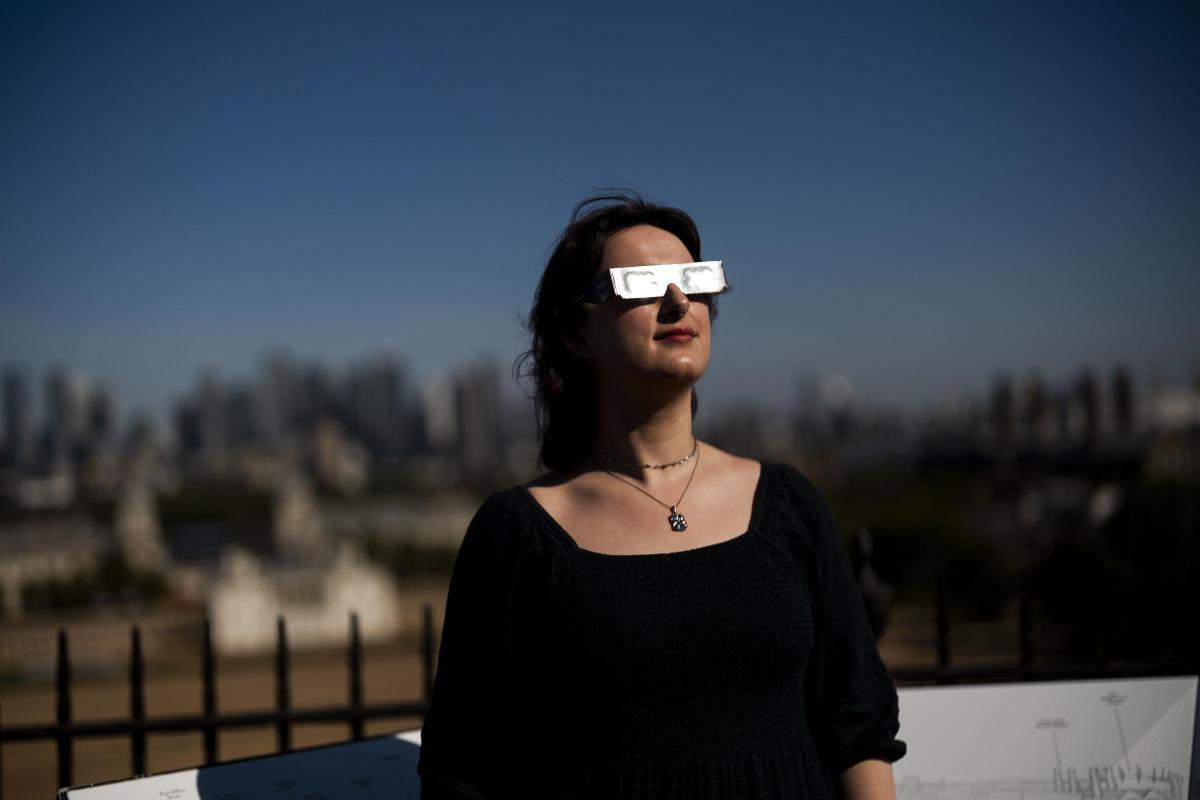

Londoners hoping to watch this evening's solar eclipse have been warned not to look directly at the Sun after specialist eclipse glasses sold out at major retailers and the Royal Greenwich Observatory ahead of the rare event.
More than 90 per cent of the Sun will be obscured by the Moon between 6.17pm and 8.06pm, marking the most significant solar eclipse seen in the UK since the total eclipse of 1999.
But with demand for eclipse glasses far outstripping supply, officials and eye health experts are urging the public to take extreme care to protect their eyes.

Mohamed Elalfy, consultant ophthalmologist and president of the Royal College of Ophthalmologists, said: "The safest way to enjoy the eclipse is to observe it indirectly, such as by watching a live broadcast.
"Looking directly at the Sun during a solar eclipse can cause damage to the retina, potentially damaging the cells responsible for sharp central vision.
"Crucially, the retina has no pain receptors, so people will not feel the damage as it happens.
"Symptoms may only become apparent several hours later and can include blurred vision, a central blind or dark spot, distorted vision, reduced colour perception and increased sensitivity to light.
"While some people recover over weeks or months, others can be left with permanent visual impairment."
Without access to ISO 12312-2 certified eclipse glasses, experts say even brief exposure to the Sun’s rays during the eclipse can cause permanent damage to eyesight.
In 1999, following the last total solar eclipse visible from the UK, the Royal College of Ophthalmologists recorded around 70 cases of vision impairment linked to the event.
About 40 per cent had looked at the Sun for less than a minute.

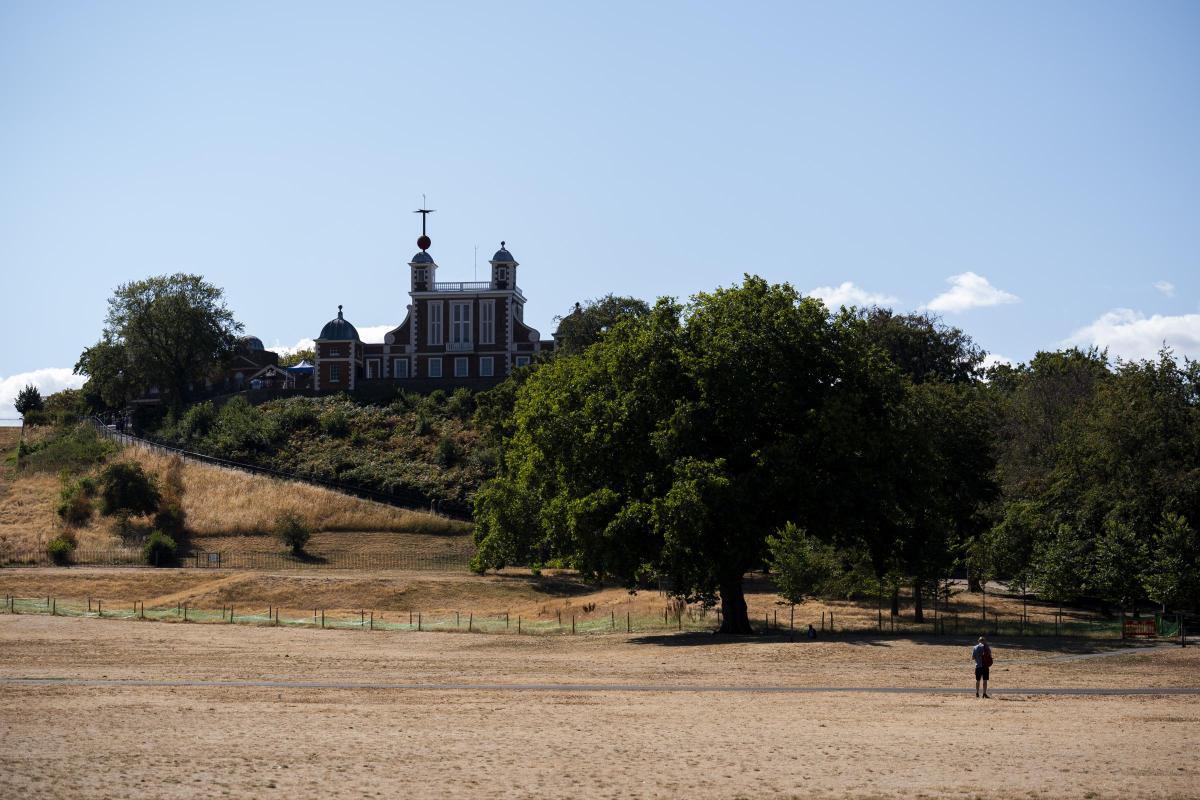
The Royal Greenwich Observatory confirmed it had sold approximately 15,000 pairs of eclipse glasses in the last month — a sellout.
Public health warnings have also targeted “knock-off” or uncertified glasses, which do not provide adequate protection.
Dr Elalfy added: "Symptoms may only become apparent several hours later and can include blurred vision, a central blind or dark spot, distorted vision, reduced colour perception and increased sensitivity to light.
"While some people recover over weeks or months, others can be left with permanent visual impairment."
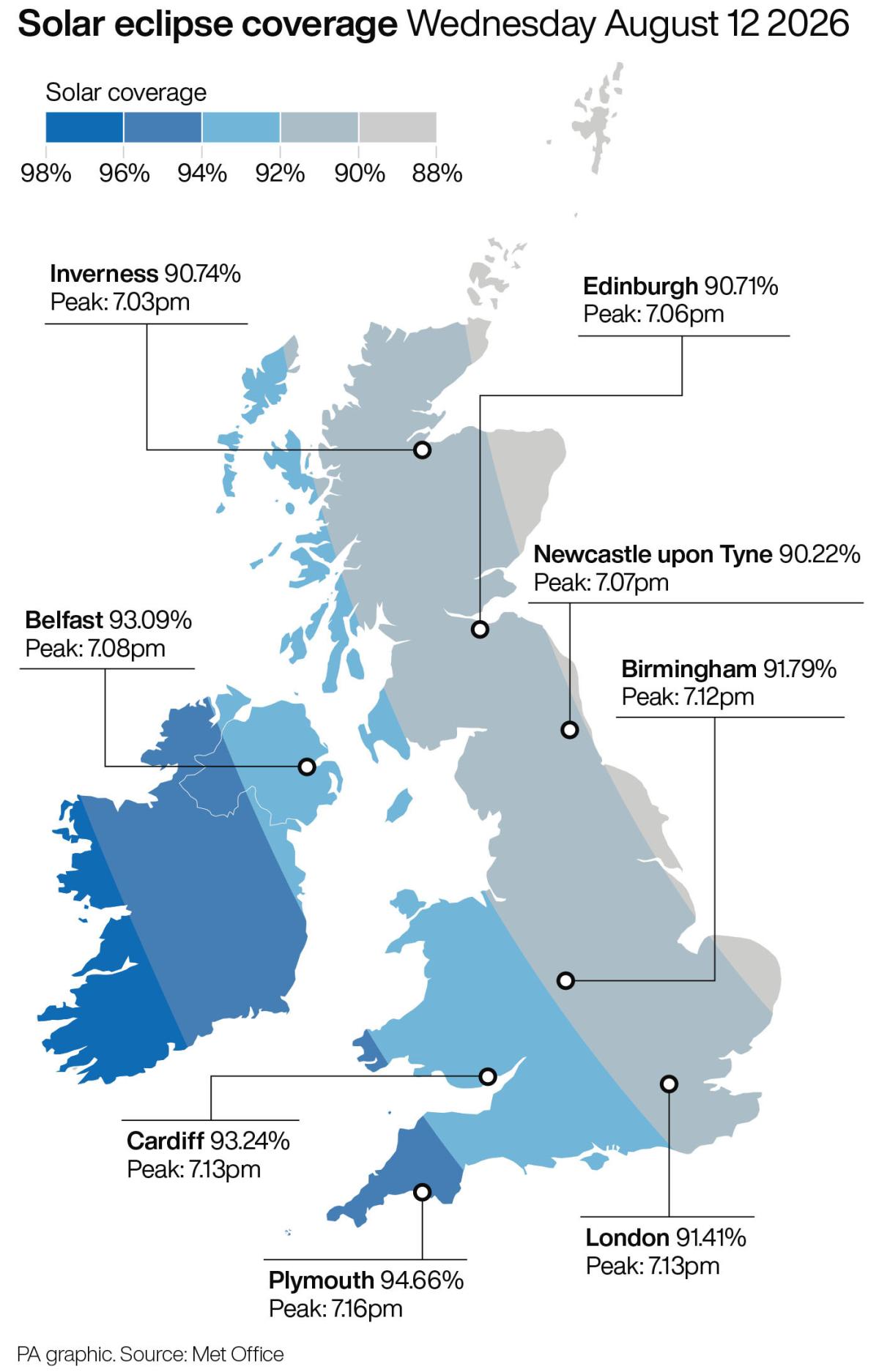
Devon, Cornwall, and the westernmost parts of Pembrokeshire in Wales are set to see the eclipse at its fullest.

In London, observers can expect to see 91.41 per cent of the Sun obscured at 7.13pm.
Elsewhere in the UK, the Moon will cover 91.79 per cent of the Sun in Birmingham at 7.12pm, 90.74 per cent in Inverness at 7.03pm, 90.71 per cent in Edinburgh at 7.06pm, and 90.22 per cent in Newcastle at 7.07pm.
Read more
- 1,500 London bus drivers to strike - more than 40 routes affected
- London's cleanest and dirtiest boroughs for food hygiene have been revealed
- This student is giving away free coffee on the London Underground
In Cardiff, the Moon is forecast to block 93.24 per cent of the Sun at 7.13pm, while Belfast will see 93.09 per cent coverage at 7.08pm.
Devon, Cornwall, and west Pembrokeshire will experience the highest level of coverage.
Plymouth is forecast to see the Moon obscure 94.66 per cent of the Sun at 7.16pm.
The eclipse will be the country’s fullest for the next 54 years.
Areas least likely to enjoy maximum coverage include the east coasts of Norfolk, Yorkshire, Aberdeenshire, the Orkney Islands, and the Shetland Islands, where coverage will range between 88 and 90 per cent.
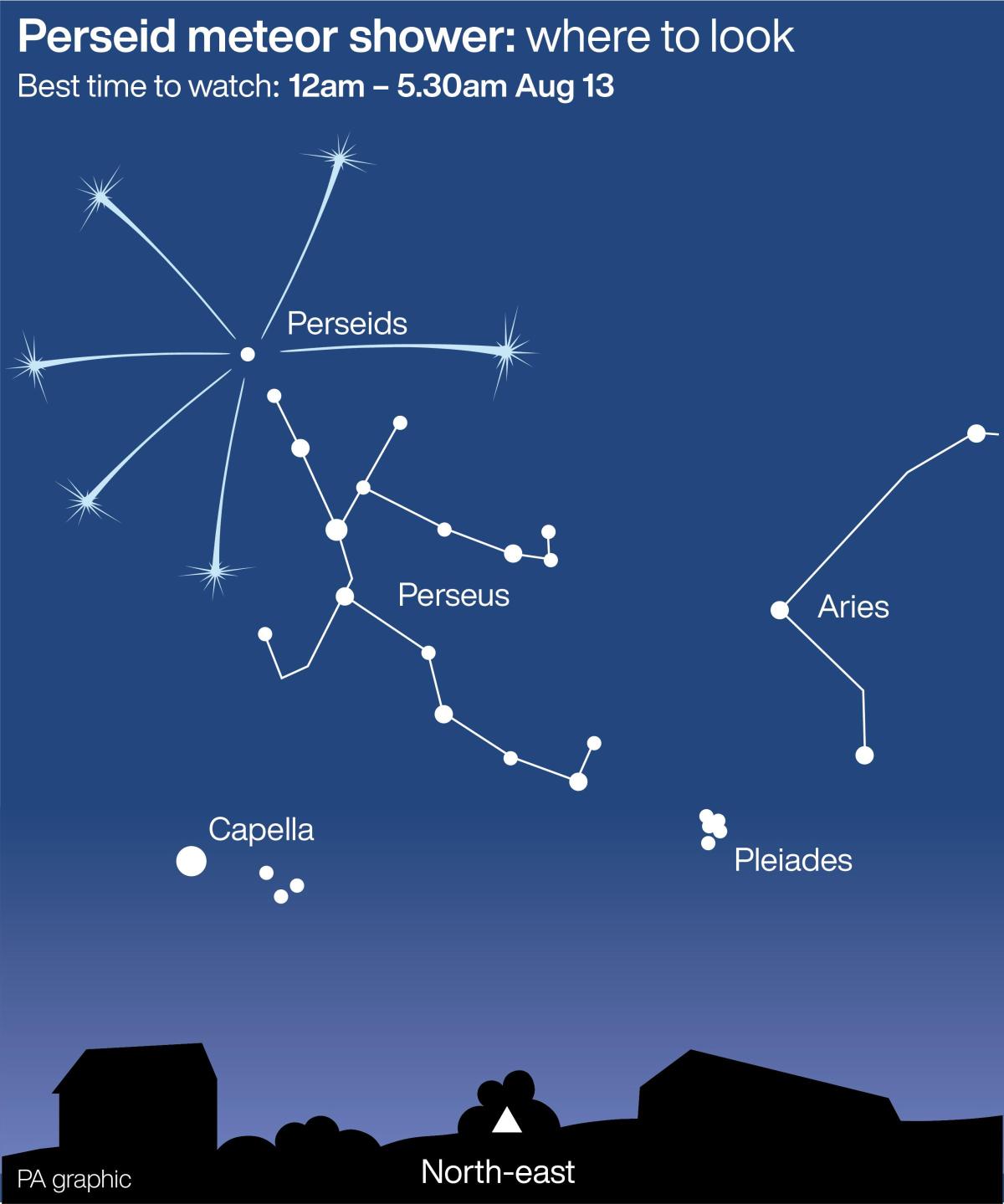
As an added treat for astronomy enthusiasts, the annual Perseid meteor shower is set to peak just hours after the eclipse, during the night of August 12-13.
The Perseids are caused by Earth passing through the debris trail of Comet Swift-Tuttle.
Each dust particle enters the atmosphere at roughly 60 kilometres per second, burning up and creating the bright streaks commonly known as shooting stars.


Share