Historic Genomes: How Ancient DNA Allows Us to Travel Through Time


This article was written by one of our Young Reporters, a scheme that gives 14 to 18-year-old school students a chance to write for a real newspaper. Find out more at the Young Reporter website.
On Saturday the 1st of March, the Royal Institution hosted an event discussing the implications of studying genetic samples and DNA from the past, and how these samples shape our perspectives on ancient civilisations.
The talk was led by Dr. Pooja Swali, who is renowned in her field for her research and analysis of ancient pathogen genomes, aiming to form a greater understanding of the evolution of diseases and outbreaks from the past, and how they have formed into the range of illnesses we see today.
Swali is currently a Research Fellow at UCL, one of the best institutions in the world, having previously completed her PhD at the Francis Crick Institute Ancient Genomes Laboratory.
Her accolades include the Scientific Achievement Award at the Francis Crick Institute, as well as the Agricultural, Biological, and Medical Sciences Award Lecture from the British Science Association for her work in Science Communication in 2023.
She was highly engaging throughout the talk, with the crowd often erupting with laughter at her well-timed humour and wit.
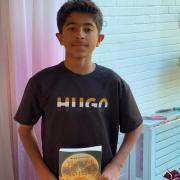
One viewer, Adwaith, was eager to share how fascinating the talk was,
“Not a single minute was wasted during her lecture!
"Every sentence was filled with eye-opening details of ancient societies and diseases, and I will definitely be looking out for more of Pooja Swali’s talks.
"The way she enthusiastically delivered the significance of ancient pathogenic DNA without a single moment of boredom was amazing.”
Furthermore, she was able to bring a supposedly dry, overly academic and specialist topic to life, not only enlightening the crowd on the general research into ancient DNA but also highlighting the behind the scenes of coming to a conclusion about a sample.
For example, she noted how she must remain focused and concentrated whenever she is studying a sample, because as she said, it can be difficult to objectively examine a sample which someone else or herself has accidentally contaminated.
During her talk she discussed the change in time of diseases and pathogens, and how they have evolved along the way.
She used findings of her own to provide specific examples of groundbreaking discoveries.
For example, she talked about her finding in 2023 of the oldest evidence of the plague in Britain, which was recovered from human remains in Somerset and Cumbria.
The ability to analyse the diseases which once haunted society is particularly fascinating, as it provides an insight into how people lived their lives and interacted while having a deadly disease among them.
Swali also mentioned the increasing development of such genetic analysis, with technology being extremely useful in examining data.
For example, scientists and researchers can access samples of DNA on a large-scale widespread reference database, with millions of samples shared a day.
This conveys the interconnectedness of science, and although she noted that individualism is beginning to form, Swali largely praised the collective effort of scientists, researchers, archaeologists and more, who work together, and contribute to such discoveries.
As time goes on, humanity becomes more developed and sophisticated as ever, however, what must be remembered throughout the present is how the past has shaped society into what it is today, and the study of historic genomes is a great place to start.